
A sewage backup is one of the most hazardous emergencies a homeowner can experience. Unlike a clean water leak from a broken pipe, sewage contains harmful bacteria, viruses, parasites, and other contaminants that can seriously affect your health and damage your property. When blackwater enters your home, every minute counts. Acting quickly helps reduce contamination, limits structural damage, and makes the cleanup process safer and more effective.
Professional water damage restoration is the safest solution for handling sewage backups because it involves much more than simply removing standing water. Certified restoration specialists use specialized equipment to extract contaminated water, sanitize affected areas, dry hidden moisture, and restore damaged materials according to industry safety standards.
Whether the backup is caused by heavy rainfall, blocked sewer lines, aging plumbing, or a failing septic system, understanding the proper mitigation process can help protect your family and your investment.
What Is Blackwater and Why Is It Dangerous?
Blackwater is wastewater that contains dangerous contaminants capable of causing illness and extensive property damage. It is classified as the highest level of water contamination because it often carries disease-causing microorganisms and hazardous waste.
Blackwater can enter your home from several different sources. Overflowing toilets are one of the most common causes, especially when a blockage prevents wastewater from flowing properly. Backed-up sewer lines can also force contaminated water into drains, sinks, and lower-level fixtures. During severe storms, floodwater may become mixed with sewage, creating hazardous conditions both inside and outside the home. In addition, septic system failures can release untreated wastewater into living spaces, while municipal drain backups may occur when public sewer systems become overwhelmed.
The reason blackwater is considered so dangerous is that it contains numerous harmful contaminants. It may carry bacteria that cause infections, viruses that spread disease, parasites capable of surviving in standing water, mold spores that reduce indoor air quality, and toxic organic waste. Even limited exposure can create serious health risks, making professional cleanup essential.
Common Causes of Sewage Backups in Youngsville
Several local conditions increase the likelihood of sewage backups throughout Youngsville and surrounding communities.
Heavy Rainfall
Louisiana regularly experiences intense storms that can overwhelm municipal drainage systems. When sewer lines become overloaded, wastewater may flow backward into residential plumbing systems instead of moving away from the home.
Tree Root Intrusion
Tree roots naturally search for moisture and often grow into underground sewer pipes through tiny cracks. Over time, they expand inside the pipe, creating blockages that eventually cause sewage backups.
Grease and Household Waste
Cooking grease, wipes, paper towels, hygiene products, and food debris gradually build up inside drain lines. As these materials accumulate, wastewater cannot flow properly, increasing the risk of backups.
Aging Sewer Lines
Older plumbing systems often develop cracks, corrosion, or collapsed sections that restrict wastewater flow. Aging infrastructure becomes increasingly vulnerable during periods of heavy water use.
Septic System Failure
Homes with septic systems require regular maintenance. Without proper inspections and pumping, septic tanks may overflow and force contaminated wastewater back into the home.
Immediate Steps to Take During a Sewage Backup
Your actions during the first few minutes after discovering a sewage backup can greatly reduce damage and improve safety.
Stay Away From Contaminated Water
Avoid walking through standing sewage whenever possible. Blackwater contains dangerous microorganisms that can enter the body through cuts, your eyes, or accidental contact.
Turn Off Electricity Safely
If contaminated water has reached electrical outlets or appliances, disconnect power only if it is completely safe to reach the breaker panel. Never stand in water while handling electrical systems.
Stop Using Plumbing Fixtures
Do not flush toilets or use sinks, dishwashers, or washing machines until the blockage has been located and resolved. Continuing to use plumbing fixtures may force even more sewage into your home.
Keep Family Members Away
Children, older adults, pets, and anyone with weakened immune systems should remain completely away from contaminated areas until professional cleanup has been completed.
Why DIY Cleanup Is Never Recommended
Many homeowners assume bleach and household cleaners are enough to disinfect sewage contamination. Unfortunately, that approach only cleans visible surfaces while leaving harmful contaminants hidden inside building materials.
Blackwater quickly soaks into carpet padding, drywall, insulation, wooden framing, cabinets, flooring, and furniture. Even after standing water is removed, bacteria and moisture often remain trapped beneath the surface.
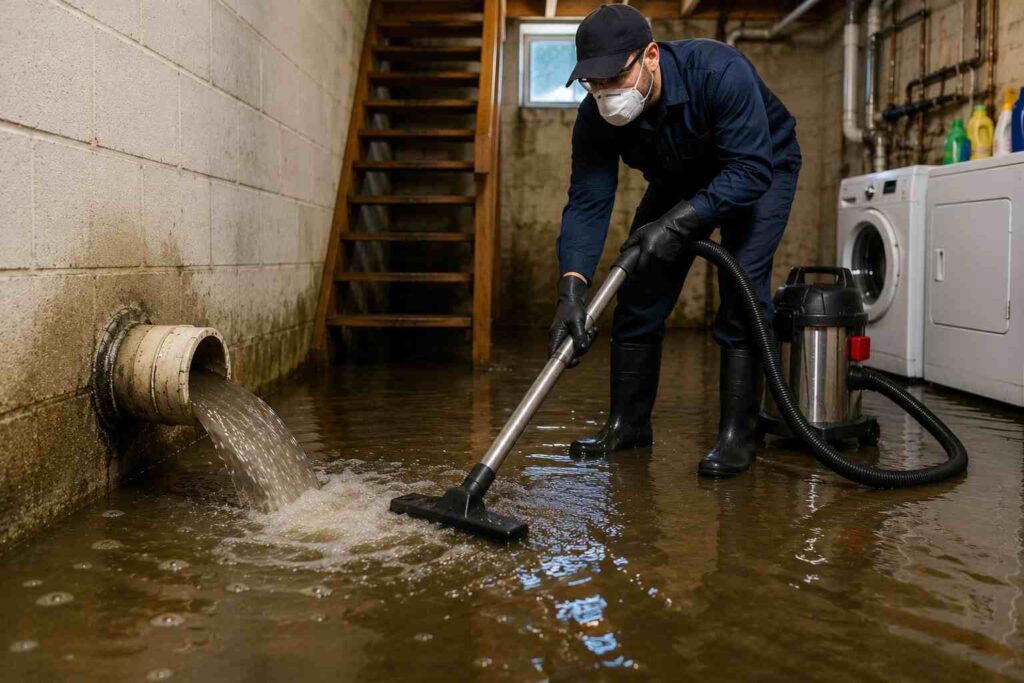
Improper cleanup also increases the chance of mold growth, unpleasant odors, and long-term structural deterioration. Professional emergency water damage restoration teams use commercial-grade extraction equipment, antimicrobial treatments, moisture detection technology, and protective gear to ensure every contaminated area is cleaned safely and thoroughly.
How Professional Water Damage Restoration Works
A professional restoration project follows a detailed process designed to remove contamination while restoring the property safely.
Initial Inspection and Safety Assessment
The restoration team begins by inspecting the affected areas to determine the extent of contamination. During this assessment, technicians identify the source of the sewage backup, determine the category of water damage, inspect structural components for hidden moisture, and evaluate any electrical or safety hazards. This inspection allows them to create an effective restoration plan while protecting everyone involved.
Water Extraction
Powerful commercial pumps quickly remove standing sewage from the property. Rapid extraction helps reduce contamination, limits structural damage, and shortens the overall restoration timeline.
Removal of Contaminated Materials
Some building materials cannot be safely disinfected after exposure to blackwater. Carpet padding, insulation, severely damaged drywall, and certain porous materials are often removed because they can continue harboring bacteria even after cleaning.
Deep Cleaning and Sanitization
Every exposed surface is thoroughly cleaned using professional antimicrobial products. These treatments eliminate bacteria, viruses, and other contaminants while reducing unpleasant odors throughout the property.
Structural Drying
Industrial air movers and commercial dehumidifiers remove moisture hidden inside walls, flooring, framing, and cabinets. Restoration professionals continue monitoring moisture levels until every affected material has reached acceptable drying standards.
Final Restoration
Once the property has been completely cleaned and dried, repairs begin. Depending on the extent of the damage, restoration may involve replacing drywall, installing new flooring, repainting walls, repairing trim, restoring cabinets, or rebuilding other damaged structural components. The goal is to return the home as closely as possible to its original condition.
Hidden Damage After Sewage Exposure
Visible sewage is only part of the problem. Much of the damage occurs behind walls and beneath flooring where moisture remains trapped. Hidden moisture often creates ideal conditions for mold growth, which can begin developing within just 24 to 48 hours. Wood framing absorbs contaminated water, leading to swelling, warping, and eventual structural deterioration.
Wet insulation loses its effectiveness while also becoming a breeding ground for bacteria and mold. Even after surfaces appear clean, lingering sewage odors may remain trapped inside porous building materials if proper drying and sanitization are not completed. Professional moisture detection equipment helps locate these hidden problems before they become costly repairs.
Health Risks Associated With Blackwater
Sewage contamination affects much more than your home’s structure. It can also create significant health hazards for everyone inside the property. Exposure to blackwater may result in gastrointestinal illnesses, skin infections, eye irritation, respiratory problems, allergic reactions, and other infectious diseases.
Individuals with weakened immune systems, young children, and older adults are especially vulnerable because their bodies may be less able to fight harmful microorganisms. Using professional restoration services greatly reduces these risks through proper containment, sanitization, and disposal of contaminated materials.
How to Prevent Future Sewage Backups
Although no plumbing system is completely immune from problems, regular maintenance significantly lowers the chances of future sewage emergencies. Scheduling routine sewer inspections allows professionals to identify tree root intrusion, cracked pipes, and developing blockages before they become major issues. Homeowners should also avoid flushing anything other than toilet paper because baby wipes, paper towels, feminine hygiene products, cotton swabs, and cooking grease can easily clog drain lines.
If your property uses a septic system, regular pumping and inspections help prevent dangerous overflows. Installing a backwater valve provides additional protection by preventing municipal sewer backups from entering your home during periods of heavy rainfall. Finally, slow drains, unpleasant odors, and recurring clogs should never be ignored because they often indicate developing sewer line problems.
Choosing the Right Water Damage Restoration Service
Selecting the right water damage restoration service is essential after a sewage backup. A qualified restoration company should provide 24-hour emergency response because delays allow contamination to spread and increase structural damage. Certified technicians should have experience handling blackwater emergencies while using advanced moisture detection equipment, commercial drying systems, and professional sanitization procedures.
A reliable company should also offer complete restoration services so repairs can continue immediately after cleanup is finished. Working with experienced professionals ensures every stage of the restoration process is completed safely, thoroughly, and according to industry standards.
Why Fast Response Matters
Time plays a major role in every sewage cleanup project. The longer contaminated water remains inside a building, the greater the chance of mold growth, structural deterioration, and costly repairs.
Responding quickly helps limit contamination, protects indoor air quality, reduces restoration costs, and speeds up recovery for homeowners. Trusted companies like Aivast Construction understand how important immediate action is and follow proven restoration methods to safely remove contaminated water and restore damaged properties as efficiently as possible.
Helpful Visual Resources
Adding visual content to this blog can improve user engagement and help readers better understand the restoration process. Consider including a before-and-after image of a restored property, a short educational video explaining sewage cleanup, or an infographic showing the different categories of water damage and the steps involved in professional restoration.
Conclusion
A sewage backup is much more than an unpleasant inconvenience; it is a serious health and safety emergency that requires immediate attention. Because blackwater contains harmful contaminants, delaying cleanup or attempting to handle the situation without proper equipment can increase both health risks and repair costs.
Professional water damage restoration provides the safest and most effective solution by removing contaminated water, disinfecting affected surfaces, drying hidden moisture, and restoring damaged areas with specialized equipment and proven techniques.
If you experience a sewage backup or blackwater emergency in Youngsville, acting quickly and relying on trained professionals will help protect your family, preserve your home, and reduce long-term damage. Understanding these safe mitigation protocols today can make all the difference when an emergency occurs tomorrow.
Frequently Asked Questions
1. What should I do immediately after a sewage backup in my home?
First, stay away from the contaminated water and keep children and pets out of the affected area. If it is safe to do so, turn off the electricity to the impacted area and stop using plumbing fixtures to prevent additional sewage from backing up. Then, contact a professional restoration company as soon as possible.
2. Why is professional water damage restoration necessary after a sewage backup?
Sewage water contains harmful bacteria, viruses, and other contaminants that cannot be safely removed with household cleaners. Professional water damage restoration includes water extraction, sanitization, structural drying, and repairs to ensure your home is clean, safe, and free from hidden moisture.
3. How long does it take to restore a home after a blackwater emergency?
The restoration timeline depends on the extent of the damage. Minor sewage backups may take several days, while severe contamination affecting multiple rooms or structural materials can require one to three weeks, including drying, cleaning, and repairs.
4. Can sewage backups cause mold growth?
Yes. Mold can begin growing within 24 to 48 hours if moisture is not completely removed. Professional drying equipment and moisture monitoring are essential to eliminate hidden moisture and reduce the risk of mold developing after a sewage backup.
5. How can I help prevent future sewage backups?
Regular sewer line inspections, proper septic system maintenance, and avoiding flushing wipes, grease, paper towels, and other non-flushable items can significantly reduce the risk of future backups. Installing a backwater valve can also provide additional protection during heavy rainfall or municipal sewer overflows.