
Hurricanes and tropical storms can leave Carencro homes with far more than visible water on the floor. Heavy rain, roof damage, rising water, and wind-driven moisture can push water into walls, ceilings, insulation, flooring, and other hidden areas. That is why Hurricane flood damage repair Carencro homeowners need after a major storm often involves much more than removing standing water.
The real challenge begins after the water is gone. Moisture trapped inside building materials can continue causing damage for days. Wood can swell, drywall can weaken, flooring can warp, and damp insulation can create conditions that support microbial growth.
Rapid structural drying is therefore a critical part of storm recovery. A careful drying process helps remove moisture from both visible and hidden areas while giving homeowners a better chance of protecting their property and belongings.
Why Hurricane and Tropical Storm Water Damage Is Different
Storm-related water damage can affect a property in several ways at once. Rain may enter through damaged roofing, broken windows, doors, vents, or other openings. At the same time, heavy rainfall can overwhelm drainage systems and allow water to move toward the foundation. Wind can make the situation worse by damaging exterior materials. Missing shingles, lifted flashing, damaged siding, and compromised seals can create pathways for rainwater to enter areas that are normally protected.
Once water gets inside, gravity does not always take it where you can see it. Moisture can move beneath flooring, behind baseboards, through wall cavities, and into insulation. This hidden moisture is one of the biggest concerns after a tropical storm. A room may look dry while moisture remains inside the structure. Without proper inspection and drying, the property may continue deteriorating after the storm has passed.
The Importance of Rapid Structural Drying
Time matters after storm water enters a building. The longer materials remain wet, the greater the chance of secondary damage. Porous materials can absorb water quickly. Wood framing may hold moisture even after surface water disappears. Drywall can retain water behind paint and finishes. Rapid drying focuses on reducing moisture levels as soon as conditions are safe.
The process typically begins with an inspection to determine where water has traveled. Moisture measurements can then help identify affected materials and areas that may not appear damaged.
Professional drying may involve air movement, dehumidification, controlled ventilation, and targeted equipment placement. The goal is not simply to make the room feel dry. Instead, the objective is to reduce moisture within affected materials to appropriate levels. This distinction is important because surface dryness does not always mean structural dryness.
How Storm Water Moves Through a Home
Understanding water movement can help explain why storm recovery may require opening or inspecting areas that appear unaffected. Water can travel horizontally beneath flooring or along structural components. It can also move downward through wall cavities and collect in lower portions of a building.
For example, water entering around a window may run inside the wall before appearing near the floor. Similarly, water from an attic leak may travel along framing before creating a ceiling stain several feet away from the original entry point. This makes visual inspection alone unreliable. A professional assessment should consider the source of the water, the materials involved, the length of exposure, and the possible path the moisture has taken.
Storm Water Extraction Carencro Homeowners May Need
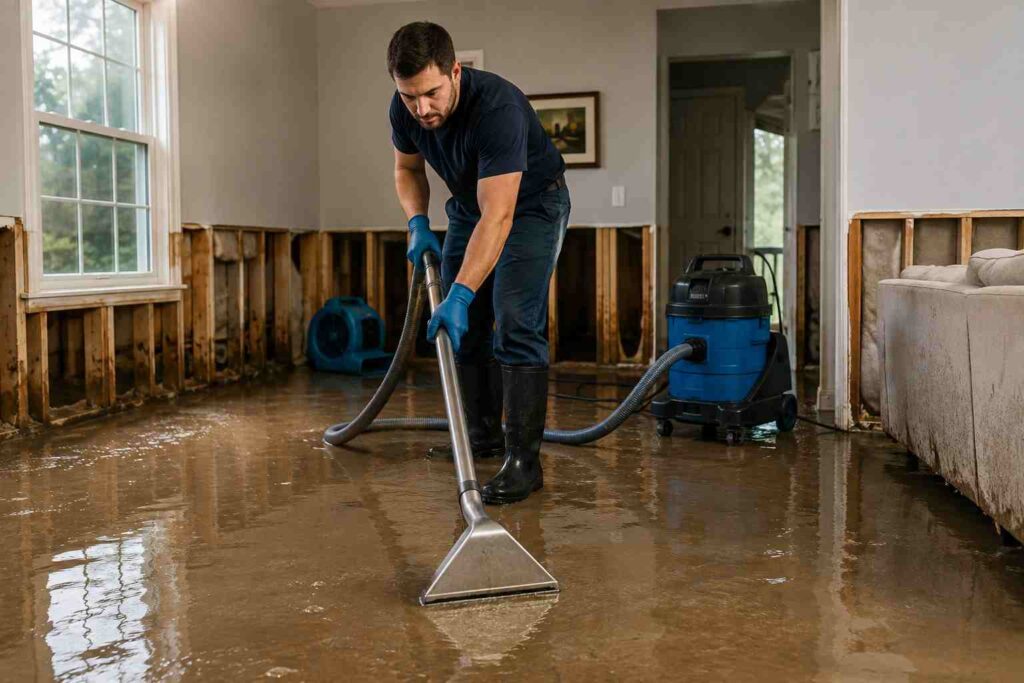
When substantial water enters a property, removing standing water is an important early step. Storm water extraction Carencro properties should be handled with attention to safety, affected materials, and the source of the water. Extraction helps reduce the amount of water that building materials can absorb. It can also make subsequent drying more effective.
However, extraction is only one stage of the recovery process. Removing visible water does not automatically remove moisture from subfloors, wall cavities, insulation, framing, or other porous materials. That is why extraction should be followed by a structured drying and moisture-monitoring process when appropriate. Furniture and belongings may also need to be moved to improve air circulation and protect them from additional exposure.
Inspecting Walls, Ceilings, and Floors After a Storm
Different building materials respond to moisture in different ways. Drywall can soften, swell, or lose structural integrity when exposed to significant amounts of water. Wood flooring may expand and buckle. Laminate materials can separate at their seams. Carpeting and padding may retain large amounts of moisture.
Ceilings deserve special attention when a roof leak occurs. Water can collect above ceiling finishes and create additional weight. If a ceiling is sagging, cracked, or visibly compromised, occupants should avoid standing underneath it until the area has been assessed.
Walls should also be checked for moisture behind finishes. Baseboards, electrical areas, insulation, and wall cavities can hide water that is not obvious during a basic visual inspection. Moisture meters and other assessment tools can help identify areas that require additional drying.
Why Dehumidification Matters
Air movement alone may not be enough to dry a storm-damaged property. When water evaporates from wet materials, it increases the amount of moisture in the indoor air. If that moisture remains inside the building, drying can slow down significantly. Dehumidification helps control the moisture level in the air and supports continued evaporation from wet materials.
The drying environment also depends on factors such as temperature, humidity, material type, and the amount of moisture present. For this reason, equipment should be selected and positioned based on the property’s actual conditions rather than simply placed in the affected room. Monitoring is equally important. Moisture readings can show whether drying is progressing or whether additional attention is required.
Residential Flood Mitigation Starts Before the Next Storm
Storm recovery is also an opportunity to think about future protection. Residential flood mitigation can involve practical improvements designed to reduce the likelihood or severity of future water intrusion. Depending on the property, homeowners may consider improving drainage, maintaining gutters and downspouts, checking roof components, sealing vulnerable openings, protecting basement or crawl-space areas, and addressing known water-entry points.
Landscaping can also affect how rainwater moves around a property. Poor grading may direct water toward the foundation rather than away from the structure. Regular roof inspections are especially useful in areas exposed to severe weather. Small weaknesses can become major entry points when strong winds and heavy rain arrive. Mitigation cannot eliminate every storm-related risk, but it can help reduce preventable damage.
What Homeowners Should Do Immediately After Storm Water Enters
Safety should come before cleanup.
If electrical systems, outlets, appliances, or wiring have been exposed to water, avoid contact until the area has been evaluated by an appropriately qualified professional. Homeowners should also avoid walking through contaminated or unknown water when possible. Floodwater may contain debris, chemicals, sewage, or other hazards. Once the property is safe to enter, documenting damage with photographs and videos can help create a record for insurance and restoration purposes.
Other useful steps may include:
- Removing items from standing water when it is safe to do so.
- Moving furniture away from wet walls.
- Increasing airflow when conditions allow.
- Avoiding unnecessary disturbance of damaged materials.
- Reporting roof or exterior damage promptly.
- Keeping records of cleanup activities and expenses.
- Having hidden moisture assessed when significant water intrusion occurred.
Quick action can help limit the amount of secondary damage.
When Professional Water Damage Restoration Is Necessary
Minor spills may sometimes be handled by homeowners. Major storm intrusion is different. Professional water damage restoration can be particularly important when water has affected multiple rooms, entered walls or ceilings, remained for an extended period, or originated from an uncertain source. A restoration assessment may identify areas that need extraction, drying, removal, cleaning, or further inspection.
In larger losses, a structured process can also help keep the recovery organized. Instead of focusing only on the most visible damage, the assessment considers how moisture has moved throughout the property. For Carencro homeowners dealing with significant storm damage, Carencro water damage restoration can involve coordinated water removal, structural drying, moisture monitoring, and repair planning based on the condition of the property.
Preventing Secondary Damage After a Hurricane
The end of the storm does not necessarily mean the end of the damage. Secondary problems can develop when moisture remains trapped inside the building. Persistent dampness can affect finishes, flooring, cabinetry, insulation, and structural materials.
That is why homeowners should not rely solely on the appearance of a room. A dry-looking wall can still contain moisture. A clean-looking floor can still have dampness underneath. A ceiling stain can indicate water that traveled from another part of the structure.
Early assessment allows these hidden conditions to be identified before they become larger repair concerns. Professional restoration teams such as Aivast Construction can help property owners understand the extent of storm-related moisture and determine the next steps for drying and recovery.
A Smarter Approach to Hurricane Recovery
Effective storm recovery is about more than removing what can be seen. The process should consider the entire moisture pathway, from the point where water entered the property to the materials that absorbed it. This includes visible surfaces as well as concealed spaces.
Rapid response can reduce the time materials remain exposed to moisture. Proper extraction can remove standing water. Air movement and dehumidification can support evaporation. Moisture monitoring can help determine when drying has progressed sufficiently. Together, these steps create a more complete approach to structural recovery.
Homeowners should also remember that every property is different. A slab-on-grade home, crawl-space property, and multi-level house may experience storm water in very different ways. Building materials, ventilation, weather conditions, and the amount of water involved can all affect the drying strategy.
Conclusion
Hurricanes and tropical storms can cause extensive water intrusion, but fast and methodical action can help limit additional property damage. Removing standing water, identifying hidden moisture, drying affected materials, and monitoring progress are all important parts of a successful recovery.
If your Carencro property has experienced storm-related flooding or water intrusion, do not assume that visible drying means the structure is completely dry. Contact Aivast Construction today for professional water damage assessment and restoration support, and take the first step toward getting your home safely back to normal.
Frequently Asked Questions
1. How quickly should hurricane water damage be addressed?
Hurricane water damage should be addressed as soon as it is safe to enter the property. Fast water removal and structural drying can help reduce further damage to flooring, drywall, insulation, and other building materials.
2. Why is structural drying important after a tropical storm?
Structural drying removes moisture that may remain inside walls, floors, ceilings, and other materials after visible water has been removed. Proper drying can help prevent ongoing deterioration and moisture-related problems.
3. Can I dry my home myself after storm flooding?
Small amounts of clean water may sometimes be handled with household equipment. However, extensive flooding, hidden moisture, contaminated water, or water inside walls and flooring should be assessed by qualified restoration professionals.
4. What areas of a home should be checked after hurricane flooding?
Walls, ceilings, flooring, insulation, crawl spaces, cabinets, and other porous materials should be checked. Moisture can travel away from the original entry point and remain hidden behind surfaces.
5. How can homeowners reduce future hurricane water damage?
Homeowners can reduce risk by maintaining roofs and gutters, improving drainage, checking seals around windows and doors, addressing foundation vulnerabilities, and taking other appropriate flood-mitigation measures before the next major storm.